Friday, December 30, 2005

The Year in Film


As much as a number of my colleagues seem to be convinced that 2005 was a great year for film-going, I remain somewhat unimpressed by the quality of new work which I saw during the previous twelve months. To say this is not to imply that there was a dearth of films worthy of mention as one of the year's best: I was reasonably satisfied with the quality of all ten films I mentioned for my Senses of Cinema ten best list which I submitted a couple of weeks ago, even before I saw an eleventh which I feel definitely deserves mention (which I will in my 'top 11' to follow). However, it is my belief that there has been noticeably few all-time great films released in the past three or four years. Put another way, I would say of the half-dozen or so best films that have been made since the conclusion of the 90s, only one was made after 2001 (and that was 2002's Russian Ark). And concerning these masterpieces -- Yi Yi, Werckmeister Harmonies, The House of Mirth, In the Mood for Love, I'm Going Home, Mulholland Drive, Spirited Away, Russian Ark -- I'm not sure any (save the first) would rate with the half dozen or so best films of the previous decade, which were in a few cases were made by the same directors (Edward Yang, Bela Tarr, Wong Kar-wai, Manoel de Oliveira) who had made clearly superior films during the prior ten years.

All of this is to wonder whether we are beginning to find ourselves between generations of great filmmakers -- as we did, I would submit in the late 70s and early 80s before the Asian new wave which was ushered in by such talents as Yang, Hou Hsiao-hsien, Tian Zhunagzhuang, John Woo, Takeshi Kitano and Hayao Miyazaki. Perhaps my number one will prove to be the first great film by one of the next generation's greatest artists, Apichatpong Weerasethakul? Perhaps Lisandro Alonso and his Argentine cinema will become this decade's [early] Abbas Kiarostami and Iran? Perhaps Lucile Hadzihalilovic will experience a peak comparable to Jane Campion's in the early to mid 90s? Hopefully, 2005 will prove ultimately to be the beginning of something new, not the trough that seems from its final days.

Here they are, the eleven best films of 2005 (1-10 in order of preference, plus an 11th not in order):

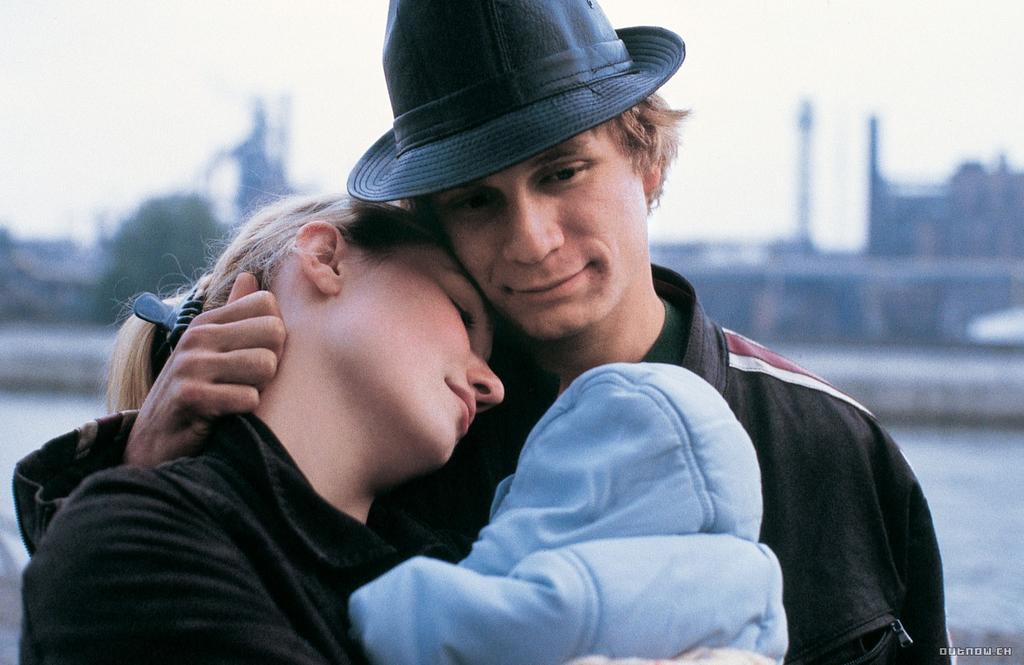
Tropical Malady (Apichatpong Weerasethakul, 04)
2046 (Wong Kar-wai, 04)
The Sun (Aleksandr Sokurov)
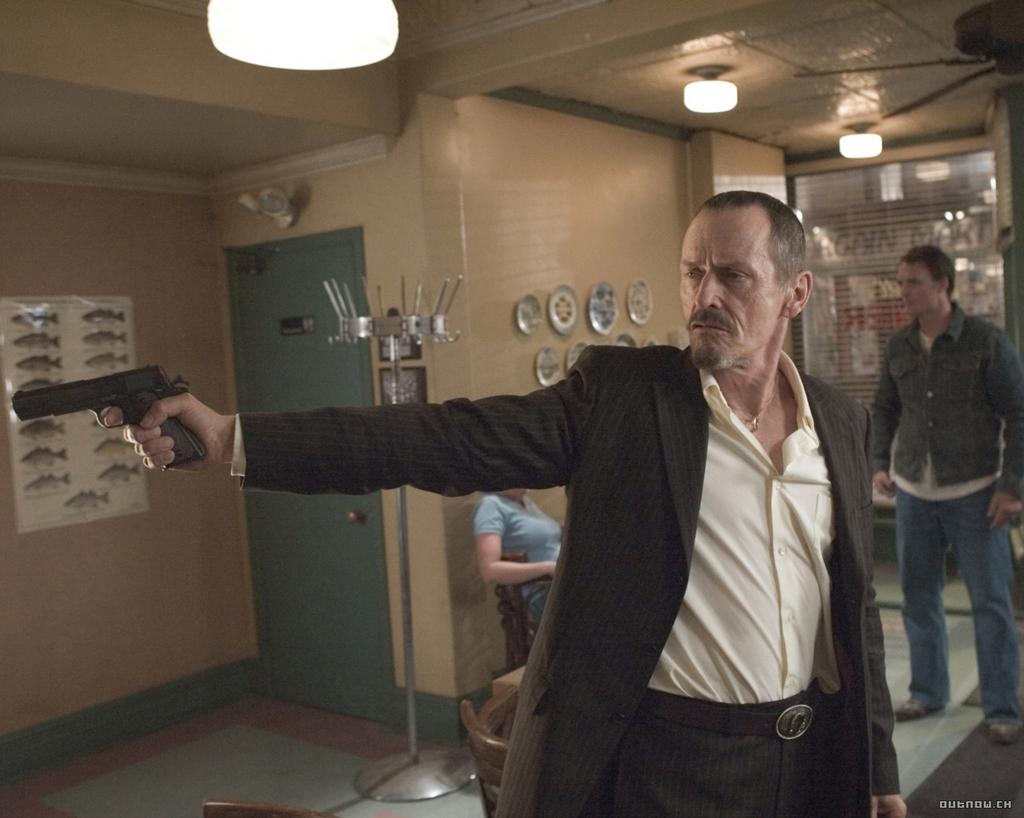
A History of Violence (David Cronenberg)
Los Muertos (Lisandro Alonso, 04)
Innocence (Lucile Hadzihalilovic, 04)
Three Times (Hou Hsiao-hsien)
L'Enfant (Luc & Jean-Pierre Dardenne)
Kings and Queen (Arnaud Desplechin, 04)
13 Lakes (James Benning, 04)

And the eleventh that I saw after my initial submission of the list:
Caché (Michael Haneke)

(For more detailed analyses of the best of these, see my annual annotated 'ten best' lists with a 2005 version to follow sometime next year.)


Then again, it was less the above films that truly rewarded my love of film this year than it was the rarely-screened silent, classical & post-classical Japanese pictures I saw as part of "The Beauty of the Everyday: Japan's Shochiku Company at 110," "Early Autumn: Masterworks of Japanese Cinema from the National Film Center, Tokyo," "The IFC Center's Weekend Classics," and "Naruse: The Unknown Master." For this cinephile, 2005 was the year of classical Japanese film in New York. It is only fitting that the best of these celebrated its fiftieth anniversary this past year.

Here are fifteen of the best:

Floating Clouds (Mikio Naruse, 55)
Humanity and Paper Balloons (Sadao Yamanaka, 37)
Boy (Nagisa Oshima, 69)
Wife! Be Like a Rose! (Naruse, 35)
Sound of the Mountain (Naruse, 54)
Mr. Thank You (Hiroshi Shimizu, 36)
Scattered Clouds (Naruse, 67)
Late Autumn (Yasujiro Ozu, 60)
The Whole Family Works (Naruse, 39)
Ornamental Hairpin (Shimizu, 41)
Flowing (Naruse, 56)
Every Night Dreams (Naruse, 33)
Women of the Night (Kenji Mizoguchi, 48)
Our Neighbor Miss Yae (Yasujiro Shimazu, 34)
Japanese Girls at the Harbor (Shimizu, 33)

Monday, December 12, 2005

New Film: Brokeback Mountain & The Chronicles of Narnia: The Lion, the Witch and the Wardrobe

Over the past two days, Ang Lee's gay-themed western, Brokeback Mountain, has been named the year's best picture and Lee best director by both the New York and the Los Angeles film critics circles. Add to these honors record-setting box office (per-screen for a live action film) and the only thing that appears to stand between 'Brokeback and an Academy 'best picture' statuette seems to be a giant ape. If Lee's film therefore seems to represent the latest blue-state victory in America's on-going culture wars, it is a success predicated upon the [well-groomed] middle-brow sensibilities of America's urban tastemakers. Not so much a film for the masses, Ang Lee sets his sights on the mass of elites for whom prohibitions on gay marriage smack of being today's equivalent of Jim Crow.

This is to neither praise nor damn Brokeback Mountain, even if much of Lee's support would seem commensurate with the film's political stance. The quality (or lack, as in this instance) of Lee's film rests in its negotiation of the terms of its generic origins. This is to say that Brokeback Mountain's ultimate failures can be traced to its inadequate engagements with the western and queer cinema. To the first, in particular, it is worth observing that Brokeback Mountain fails to employ landscape in any fashion other than for its ability to give two lovers cover for their illicit affair. In this way, Lee eschews the pictorial and iconographic values of the western landscape in exchange for narrative expedience. While this alone does not preclude 'Brokeback from taking its place among the canon of westerns -- Rio Bravo (1959, Howard Hawks) for instance uses a similarly indescript space as per the director's programmatic artlessness -- Lee combines this visual imperviousness with a glibness towards the geographic West manifesting itself in Anne Hathaway's teased hair and her Texas farm implement magnate father's insistences that a young boy must watch football if he is going to ever grow up to become a man. All of this is to say that Mr. Lee shows no affection for the setting of his film.

However, lest it be said that Brokeback Mountain is not fundamentally a western, as apparently the director has claimed, Lee does hold to the basic homo-social structure of the genre (at least for the film's first half). Indeed, 'Brokeback proceeds according to the suggestion that the ties of fraternity which play such a defining role in the history of the genre are irreducibly possessed of a latent homosexuality. In so doing, Lee does not so much revise his genre of choice as underscore its political deficiencies (just as Far From Heaven [Todd Haynes, 2002] indicates a need to revise Sirk which frankly I don't see). Ultimately, it is easy to see why Lee decided to make a film in a genre for which he has little regard in a geographical location he likes even less: because it allows him to score easy points with his middle-brow crowd; this is a film made to make those that agree with it feel morally superior.

At the opposite end of the spectrum, Andrew Adamson's The Chronicles of Narnia: The Lion, the Witch and the Wardrobe offers red-state safe, mass entertainment in a richly sketched, lovingly-crafted space which is already well-known to millions of young readers. As a former reader of the 'Chronicles myself, let me attest to the justice that Adamson has done to Lewis' children's classic. Indeed, I would use that last word, "classic," or better yet instant children's classic, to describe the results of Adamson's adaptation. One can imagine that this version of the beloved first volume will introduce future generations to Lewis' stories, while giving its many readers the satisfaction of seeing Lewis' world come to CGI life.

Of course, The Chronicles of Narnia are no less imbued with a perspective than is Lee's film; nevertheless, Lewis' (and now Adamson's) Christian allegory allows its viewer a space that is absent in Brokeback Mountain. Surely there is Aslan, the Christ-figure, who dies for the sins of the young Edmund (in betraying his siblings for the fleeting pleasures of Turkish Delight) before rising again to liberate the people of Narnia from eternal winter; and certainly there is the faith of young Lucy which offers a prototype for Christian faith. Yet, there is also the pagan iconography of Lewis' and Adamson's world and its unmistakable critique of fascism (its World War II setting, Narnia's secret police force) which allow for separate readings -- quite unlike Lee's propagandic denunciation of society.

Yes, those with a penchant for the Christian faith will see Aslan's suffering servant as a propitiation for the children's and possibly their own sins, while those without will encounter a narrative filled with wonder and magic -- quite literally. Part of this magic, to be sure, rests in the performances that Adamson summons from Tilda Swinton (there will never be a more perfect White Witch) and the children, particularly Georgie Henley as Lucy Pevensie. Indeed, it is the wonder and the pathos of her performance that truly sustains Adamson's Narnia -- a wonder shared by anyone who has fancied themselves to be Lucy or Susan or Peter or even Edmund.

It is curious then that it is in Lewis' tale that we find characters who are flawed but whom ultimately attain redemption, and not in Lee's very grown up piece of Oscar-baiting, where no enlightened member of the audience is to blame. It is society itself, and one which is comfortably distant (in time and space) from its New York and Los Angeles advocates, which is at fault; would that they would have just allow these two men to be happy together -- and would that we might do the same today. To take my cue from Lewis and not Lee, let me just ask which is closer to the truth: is everyone else to blame or sometimes are we ourselves at fault? And if society was as we would like it, would the attainment of happiness be a simple matter of knowing ourselves?

Thursday, December 1, 2005

New Film: The Ice Harvest

Entering the final month of 2005, it has suddenly become clear to me just how atrocious this past eleven months have been for new American cinema. Aside from Canadian auteur David Cronenberg's masterful A History of Violence and German madman Werner Herzog's Grizzly Man, it seems reasonable to me that the modest virtues of Harold Ramis' The Ice Harvest may just make it the second or third runner-up on what is thus far a dismal list (save us Brokeback Mountain and The New World). Indeed, it is only the former that will figure on my year end's top ten list, not that that says anything for the relative quality of Hollywood. For 2002, for instance, I would not include a single American-financed film among my ten best (though again there is a Cronenberg film, Spider) even if I could name perhaps a half dozen very good films which I prefer to everything but A History of Violence and Grizzly Man this season. The point in this is that one, much of the best of world cinema happens outside the U.S.; and two, usually we fare quite a bit better -- Hollywood-wise -- than we have in 2005.

So, yes, if you've confined yourself to Hollywood pictures this year, by choice or circumstance, you most likely have convinced yourself that there are no good movies out there... and largely, you're correct.
However, as I have said, there are modest virtues to be witnessed in the John Cusack-Billy Bob Thorton headliner, The Ice Harvest, which opened nationwide last week to below average reviews and an indifferent public -- judging by the poor box office. What critics and audiences have missed in passing over the über-cruel comedy cum neo-noir is this year's most extravagant reinterpretation of genre, in this case the Christmas film, even if the Ramis-helmer may at times seem like Bad Santa (2003) redux or a Coen Brothers retread.

In the Groundhog Day director's favor, however, is what might be judged to be the fuller reversal of genre (even if it can't equal Bad Santa's wicked pleasures) and the more generous picture, as it avoids the condescension of the Coen's, however nihilistic Ramis' perspective may be. The point is that The Ice Harvest operates according to a spatial logic that catalogues those places that Christmas movies tend to elide -- bars, strip-clubs... okay, lots of strip-clubs, etc. -- and a set of details that seem to cut against the holiday's mythical grain, be it Oliver Platt's Christmas Eve binge-drinking and subsequent purging, Thorton's porn video and even the (freezing) rainstorm itself, which Ramis snidely and economically introduces during the opening credit sequence with a few drops falling on a nativity Christ child. These are people and places which exist -- on Christmas just as they do anytime else -- but typically have no place in your typical Christmas movie... and rightfully so, one could argue.

Nevertheless, Ramis' Bad Santa set-up (which is surely the epochal film in this sub-subgenre) gives way to a Fargo (1996) or A Simple Plan (1998) without the accents -- or more importantly, given that we are talking about Witchita and not Minneapolis, the snow.
Consequently, Ramis reminds us of his postmodern street-cred by giving us another generic mash-up, just as he presaged Pulp Fiction a decade earlier with his experimental Groundhog Day-time structure. Still, it is less the director's adept generic/tonal shift than it is the cohesiveness of his heterocosm that marks The Ice Harvest as noteworthy new Hollywood cinema. The very fact that The Ice Harvest engages our sense of narrative expectation, let alone the rigor of its conceit, provides its anomaly in the wasteland that has been 2005.

Monday, September 26, 2005

New Film: L'Enfant (The Child)

Jean-Pierre and Luc Dardenne's Cannes Palme d'Or winner, L'Enfant (The Child), deserves perhaps the highest praise that can be bestowed upon a work of art -- that it is true. To make this claim is not to suggest that it speaks from a right perspective or that it possesses a style that commensurately depicts its setting; rather, to say that L'Enfant is true is to acknowledge the verisimilitude of its psychological description. From this its viewpoint is to be judged, not vice versa.


That viewpoint, a Jamesian Christianity (as in the works-driven epistle), extends the logic of the brothers' previous masterpiece, The Son (2002). If the earlier film manifested an artisanal purity in the singularity of its purpose, both narratively and formally, the latter is a far messier affair, consistent with the titular adult lead's indirect path to salvation. His is not an easy attainment of maturity founded upon self-actualization, but is instead a reaffirmation of The Son's earlier claim that man is to be judged by his actions. It is not enough for one to be contrite in their words; genuine behavior modification must follow. That this is so is not simply a matter of a divine calculus but is instead reflective of self-absorption's power to destroy the lives of others, whether it is the emotional destruction of Sofia after he sells their newborn child or Bruno's abandonment of his weakened adolescent protege after a robbery. This is the true meaning of 'love thy neighbor.'

Of course, the film's inclusion of the theft and the subsequent theme of redemption through imprisonment reference the brothers' most consistent source, Robert Bresson, and particularly Pickpocket (1959) -- just as their Rosetta (1999) refashioned Mouchette (1967). (So too there exaggerated use of sound and extreme reduction of depth of field.) In this way, they continue to be the master's most loyal followers, updating his inimitable cinema with their own Jamesian variation. Moreover, the film's absence of arc befits their own revision in L'Enfant: it is no longer the struggling saint but instead the sinner who is now the subject of their allegory -- a Child, helpless without the love of his Father.

Saturday, September 24, 2005

New Film: The Weeping Meadow

There are anachronisms and then there are anachronisms. If in the past I have found it necessary to praise a director like Clint Eastwood for a technique more at home in 1962 than in its own age, I have done so with the feeling that for someone like him, form was only a means to an end. For Eastwood, style was (and is) never its own justification, but can be rather something to detract from the urgency of his narratives. To someone like Eastwood, modifications in form, rather than indicating some sort of aesthetic progress, possessed a danger in their potential to obscure his artistic intentions. At the same time, these same purposes were never themselves static, but instead experienced remolding in the image of their own particular moments. In short, while his technique stayed the same, his thought was evolving.

At first glance, Theo Angelopoulos might strike one as the same sort of figure. After all, The Weeping Meadow, whatever else it is, is a film from a different stylistic moment. Nonetheless, the ideas contained in The Weeping Meadow show the director's evolution from a Marxist historicism, focusing almost exclusively on Greek history (The Travelling Players, 1975), to a more existential consideration of Balkan realities (Ulysses' Gaze, 1995). Yet, there is one important difference between the aforementioned Eastwood and Angelopoulos: whereas invisibility of style is Eastwood's ultimate end, Angelopoulos has long foregrounded his own once dazzling technique. The problem is, it no longer seems as though the Greek auteur is utilizing his form to ask questions. If The Travelling Players established a fatal


continuity to the exigencies of Greek history, via a camera that moved from figure grouping to figure grouping, often bridging temporal discontinuities over the course of a single tracking shot, The Weeping Meadow's continued employment of this same style, minus its formally radical employment, fails to remain self-justified. If anything, The Weeping Meadow is a film that should have been made twenty-five plus years ago, considering its scant modifications of his own modernist form. (Sparing use of music psychologically is in fact the only reevaluation of Angelopoulos' Travelling Players' technique.) This is, in other words, a profoundly dated text. Of course,The Weeping Meadow has its moments of beauty -- which Angelopoulos, as always, never allow his spectators to forget -- but the ability to photograph a Greek landscape poetically loses some of its appeal as the film drags on toward the three hour mark. Its one thing to watch Angelopoulos reinvent the medium for four continuous hours in The Travelling Players; it's yet another thing to see him copying himself -- poorly -- for three.

So again, there are anachronisms and there are anachronisms. Unfortunately, a thirty-year late re-tread of late modernism is not exactly the most enticing variety. If anything, The Weeping Meadow reconfirms the necessity to understand films at the moment of their creation. If we can forgive a film like The Birth of a Nation (1915) for its aberrant politics (by today's standards) it is likewise important to understand the inadequacy of a film like The Weeping Meadow on the basis of its historical moment -- which unfortunately for the director ended long ago.

Friday, September 23, 2005

New Film: A History of Violence

*WARNING - THERE WILL BE SPOILERS FROM THE FIFTH PARAGRAPH ONWARD IN THIS ANALYSIS*

David Cronenberg's A History of Violence is to date the best English-language film of 2005. That it should be so will come as no surprise to anyone who has paid attention to the director's work over the last decade. To a film, there is perhaps no corpus in the Anglo-Saxon cinema during this time which has continued to examine the mysterious depths of personality in the way that Cronenberg's has. For the countless scores of movies that seek to awe and entertain us -- and make no mistake, Cronenberg does both -- here is a body of work that foremost seeks to ask the most essential of questions, what is it to be human? Indeed, a film like A History of Violence makes us wonder why all films don't attempt something similar, given the ease with which the visceral and the thought-provoking commingle within the film.

But of course A History of Violence is a rarity for Hollywood. Then again, as much as we sometimes like to pretend otherwise, a film like Cronenberg's has always been a rarity in Hollywood. Why does Alfred Hitchcock -- Cronenberg's most obvious influence in A History of Violence -- continue to engender such a cultish following? Because he was unique, because he was better than most... and so too is Cronenberg.

Like Hitchcock, Cronenberg adapts the default form of Hollywood classicism to suit his own idiosyncratic narrative ends. 'Adapt' (rather than adopt) as his form, at times, evinces its own consubstantial logic quite apart from the basic codes of Hollywood storytelling. Perhaps the best example of Cronenberg's narratological flexibility occurs in the opening scene in which two outsider hoods "check out" of their motel. With the camera remaining outside their crummy roadside accommodations, Cronenberg introduces us to these characters by making a very important discursive point: they are cold-blooded killers. This point, indeed, is not made until Cronenberg cuts for the first time as the character who had remained outside the entire time enters the motel office. Inside we see, along with the indifferent henchman, that his protege has executed the two motel workers. That Cronenberg maintained the spatial and temporal continuity of the earlier shot confirms what has already been suggested: that he entered the space with the sole purpose of murdering the pair; that it was not accidental, that his execution did not involve a struggle or any sort of in-the-moment rationalization (had there been a cut, on the other hand, either would have been structurally possible). If this is not enough, the gentleman now in the room proceeds to kill a little girl who spots him looking through a cooler -- an on-screen variation of what had been already established through a singluar stylistic choice.

In the next shot we are introduced to the film's protagonists, Tom Stall (Viggo Mortensen), his beautiful wife (Maria Bello), his son and daughter. The screaming little girl is quickly reassured that there is no such thing as monsters as we are ominously introduced to this swath of small-town American perfection -- and their seemingly obvious future victimization. (Importantly, Cronenberg does not make fun of their ethos: visually he shows the natural beauty of the Midwest, while the couple's sexual life seems to indicate an uninhibited ideal.) However, before we get to this point, Cronenberg establishes the teenage son's victimhood -- to a high school bully -- giving us another character on whom we wish justice meted.

Subsequently, the two out-of-towners force their way into Tom's diner at closing time. Once it becomes clear that they are there to rob the establishment -- which we know will mean certain death for our protagonists -- and once one of the characters moves to rape the female waitress, Tom acts almost instinctively, killing the pair of assailants with breathless dexterity. Suffice to say that he is regarded as a hero and that we feel no sympathy for the dead, even if we might regret their physical pain (which Cronenberg carefully includes).

However, as any one who has ever seen a Cronenberg film knows, what follows is anything but straight narrative. Following Tom's heroic action, a mangled Ed Harris and a pair of his cronies arrive in the diner. Mr. Harris's character insists on calling Tom, Joey, which, for the naturalistic grace of Mortensen's performance, we find as odd as Tom evidently does. Regardless, the former persists, and Tom seems to have been thrust in a very Hitchcockian 'wrong man' scenario. As we soon learn, Harris is a mobster with a beef against this Joey who was responsible for carving up his face with barbed wire. Again, for those acclimated to the Cronenberg universe (think Spider, 2002) one begins to wonder if Tom is indeed Joey without knowing it -- that he is some kind of "schizo" as his wife wonders. Our answer comes shortly for this man who is strangely adept at killing, but who is nonetheless saved by his son at the last possible moment. (It is therefore implied that the young man might just share his father's violent acumen.)

The point is, whether or not Tom/Joey is aware of his past, that this violence exists within him, which is precisely where Cronenberg's big questions commence. Does Tom bare responsibility for Joey's past actions if he is not aware of them? Which is Tom/Joey's true personality? Can he be both of these people at once, and if so what makes him the person he is (if it is not a single personality)? Who is he, in other words, and what is it that makes him human if not a unified self?

Of course, there is another dimension in what would seem to be his suppressed former (perhaps true, though not necessarily) self: that there is violence living inside him. Indeed it is at this point that Cronenberg's film skips over any possible misreading as political allegory -- violence is a fact of life, or more precisely in the instance of this narrative, a former life. In fact, the history to which the title refers is that of Tom's self, a history which Cronenberg's narrative slight-of-hand shows to be in his everyman, and implicitly in all of us. That his physically timid son manifests the same violence (while finding a narrative causality in his genetics) reinforces the ubiquity of human violence. While it is true that Cronenberg is removing the too-perfect veneer of Middle America, it is of even greater importance that he is excoriating the illusory skin of human goodness. In this most perfectly ordered specimen there is untamed violence.

Wednesday, August 31, 2005

Quick take on Rossellini

Although Roberto Rossellini was indisputably one of the most influential of European directors, the fact that his influence was founded upon a philosophical or conceptual attitude rather than upon the imitation of stylistic devices or thematic preoccupations has meant that Anglo-American film historians in particular tend to pay little more than lip service to his achievement, when not ignoring it altogether. Yet such indifference constitutes a major injustice not merely to a director who redefined the parameters of the cinema but to one of the supreme "documenters," in any art form, of the latter half of the 20th century.

-Gilbert Adair

Roberto Rossellini is one of those curious figures in world cinema who seems to generate more respect than admiration. As Adair accurately points out, the reverence typically paid to the director is little more than tokenism. Certainly, his realist aesthetic -- location shooting, natural light, non-professional actors, longer-duration takes -- has benefited filmmakers of sparse means the world over. He is remembered as a figure of undeniable historical significance without being thought of as the equal to directors of a similar influence (such as Griffith, Renoir, Welles, Bresson, Godard). He certainly lacks the devotion many hold for his best-known countrymen, from Fellini to Antonioni to Bertolucci, among others. However, I would submit that he is at once their superior and the greatest of all Italian directors, without even making any allowance for his firm place in film history. This is to say that his corpus speaks for itself, outside of history, as one of the most beautiful and inspired that the medium has yet seen.

Yet, again he is underestimated. The reason for this, it would seem to me, is that Rossellini's style is too often considered for its historical circumstances, its facility for assimilation, and even for what he expresses through this style (or less opaquely, his themes) rather than for what this style says about the director's viewpoint. Indeed, it is in an examination of its conceptual genesis that a unity emerges to Rossellini's corpus, marking him as one of the medium's best.

Specifically, it seems to me that the key to appreciating Rossellini rests in his epistemological ideas. For Rossellini, the truth is evident on the surface of things. From his early, immediately post-war films (Rome, Open City [1945], Paisa [1946], Germany, Year Zero [1948]) to his Bergman cycle (including Stromboli [1950], Voyage in Italy [1953] and Fear [1954]), his historical recreations (The Flowers of St. Francis [1950] and The Rise to Power of Louis XIV [1966] among others) and more proper documentaries (such as India [1958]), what marks his entire body of mature work is a faith in humankind's perception of truth. Take the somewhat forgotten, small masterwork Fear: throughout the picture, Bergman's character attempts to conceal the truth of an adulterous affair. However, her body language belies the secret she is attempting to hide -- at one point her blackmailer asks rhetorically why she blushes, why her hands trembled and why she was so quick to give away her money. In other words, in spite of a shared Catholic faith with Robert Bresson, Rossellini departs from the Frenchmen (as well as from such directors as Michelangelo Antonioni, Wong Kar-wai, and even Eric Rohmer in Triple Agent [2004]) in the his view that psychology is discernible in gesture.

As it has been claimed, this basic understanding of the comprehensibility of truth is not limited in fact to the psychologically-intensive Bergman cycle, but manifests itself throughout his ouevre. The post-war texts offer their morals within the context (another key theme in Rossellini) of a war-ravaged Europe. In seeing the condition of Germany in the 1948 film, one understands the despair of the child protagonist. Surface reality discloses truth. Similarly, The Flowers of St. Francis, perhaps his greatest work, shows (key theme number three) the basic rhythm of a long-since extinct life -- a life lived absent of any goals other than the service of the Lord -- which as such reveals Christianity's distinct understanding of time; less abstractly, India proposes that its presentation of Indian life is sufficient to reveal essential truths of the nation.

In this basic understanding of epistemology, I would argue, Rossellini shows himself to be an artist seeking a form to express his ideas, not simply the innovator of a technique born of historical circumstance. It is in this consistency of viewpoint, manifesting itself in his form, that the beauty of his work becomes clear. Rossellini's cinema deserves to be appreciated not only for its historical value, but indeed for the beauty of its expression of content. In this lies its grace.